Blogs

Filter by Date Period

Select Date
Filter by Date Range

Filter by Category

Filter by Category

What Happens when a Software Designer Doesn’t Listen?

What happens when a Software Engineer, Enterprise Architect and Network Ops Engineer walk into a bar?..... . You know that head-slap moment when you realise software is more hindrance than help? I had one such experience back in circa 2005, when I watched a genuinely brilliant network ops engineer spend an entire afternoon navigating tools trying to do something he already understood... ...But couldn't. It was…

Read More »

Managing OSS Transformation Risk

A reader of Mastering Your OSS recently reached out to indicate that he found Chapter 7 useful for understanding OSS-related risks and mitigations. He pointed out that this section encourages readers to contact us for a more comprehensive list of risks and risk management strategies. That's right. So here are the top-8 articles/pages on our website that discuss OSS/BSS project risk management: Top 10 OSS project…

Read More »

Software Deals Are Like Marriages. Can we Prevent so Many Ending in Divorce?

Have you ever wondered why there's such a big deal made of the start of a marriage (there's a whole industry built around engagements and weddings), but there's almost no fanfare at the end? Samuel Thompson pointed this out on Greg Isenberg's podcast. Samuel highlighted that there are lots of products designed for the start (and the big party that goes with it), but there aren't…

Read More »

How to win friends and influence OSS

Whether we like it or not, most of us judge books by their covers. Sometimes that’s visual. Sometimes it’s the title. But here's a thing I find interesting. Having written a couple of books myself, a lot of thought goes into choosing the title to resonate with the viewing audience. And yet, sometimes a title that's clearly had a lot of thought go into it turns…

Read More »

Is AI a digital transformation bridge or noose? (Part 5 – Precedents and Summation)

The last four articles have explored the way some telcos are using AI technologies counter-productively today – AI entanglement, transformation planning, dependency visibility and the hazards of autonomy. The final question for this article is whether telcos can or will ever earn the right to unplug their legacy OSS. In Part 4, we ended with a deliberate gap. We touched upon how autonomy only seems to…

Read More »

Is AI a digital transformation bridge or noose? (part 4 – Autonomy Hazards)

I’ve never achieved true autonomy in an end-to-end, complex telco environment. What follows is a hypothesis. I'd love to hear your thoughts and clarifications. What I have achieved are small autonomous solutions that did work nicely, until a single baseline parameter changed. Then assumptions broke, dependencies surfaced and entire solutions + datasets had to be rebuilt rather than adapted. In fact, the "extra cleverness" that I'd…

Read More »

Is AI a digital transformation bridge or noose? (part 3 – Dependency Visibility)

Many (myself included), believe that recent progress in AI-based technologies should accelerate digital transformation (even if only by inspiring us to think differently about the digital systems we already have). However, in Part 1 of this series we explored a paradox. The most common uses of AI today are not loosening the grip of legacy OSS/BSS, but quietly perpetuating them for years/decades to come through new…

Read More »

Is AI a digital transformation bridge or noose? (part 2 – Transformation Planning)

In Part 1 of this series, we explored an uncomfortable paradox. AI is being excitedly positioned as the key to telco transformation, yet many initiatives are quietly reinforcing the same legacy digital landscapes they would love to replace. That leads to a more fundamental question. Before choosing AI models, architectures, or tooling, must we actually decide what kind of transformation we want - Evolution or Revolution?…

Read More »

Is AI a digital transformation bridge or noose? (part 1 – AI Entanglement)

Like microservices before it, AI and agentic solutions are increasingly seen as the panacea of digital transformation. In telco circles, AI is often framed as the fastest path to escape. A way to finally move beyond the clunky, legacy worlds of OSS/BSS. Piecemeal AI projects promise quick wins, modern capabilities, and a stepping stone towards grand visions like Autonomous Networks and Autonomous Operations. But when you…

Read More »

Trust

We speak with buyers and sellers every week, and one word keeps repeating. Trust. It keeps appearing in buyer conversations and seller conversations alike. It's more than a word though. It's costing the telco industry millions. When trust is missing, 18-24 month buying cycles become the default. This is the Buyer - Seller Chasm that we talk about a lot. You're probably already well aware of…

Read More »

How do you build experience when AI handles all the experiences?

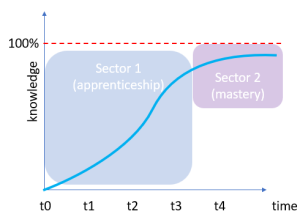
The promise is simple: let AI handle the easy work, and humans focus on the hard work, the challenging work, the fun work. But the hard work is hard because it depends on intuition and experience that comes from years of guidance doing the easy work (the apprenticeship). So if AI handles all of the experiences the beginner stage (the apprenticeships), we don’t get “more experts”…

Read More »

Are we missing something? Is AI building a house with many competing thermostats?

I’d always assumed that more feedback loops meant better control, and faster / smarter / optimal operations. But what happens when each system has its own idea of what “smart” or “optimal” even means? Are we, in fact, optimising our way into instability and inefficiency? Could hundreds of competing feedback loops be automating misalignment faster than ever before? These are just a few of the questions…

Read More »

Fighting the Telco Immune System with AI: The Moviestar Strategy

We're already seeing it. AI is slowly infiltrating telecom, one little project at a time... monitoring, automating, optimising. In AI, we have one of the most disruptive opportunities of our lifetime, but the results of telco AI projects to date still feel eerily familiar. Are most telcos using tomorrow’s tools with yesterday’s thinking? Maybe the real breakthroughs will not come from subtly refining the machine, but…

Read More »

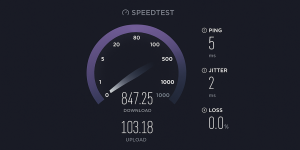
Speed Kills (the Competition): A Confusing Speedtest Image Told the Story

We know telco customers want faster speeds.But is it possible that we're focussed on the wrong type of speed?Here's a hint: the real drag isn't line-speed. . “Finally”: The Message that Triggered an Article Late last week a friend pinged me with a SpeedTest screenshot and a single word: “finally.” I was confused. At first I had no idea what he was trying to tell me.…

Read More »

12 reasons why our OSS get better by wearing hi-viz vests

Ever noticed how many OSS decisions are made by people who have never set foot on site? What if your single most powerful OSS upgrade this year is a day riding shotgun with field techs in a hi-viz vest? This article digs into the quiet damage that OSS experts with a total lack of field time does to our processes, tools and data. . Introducing the…

Read More »

Telco is a Circus with Thousands of Balls in the Air

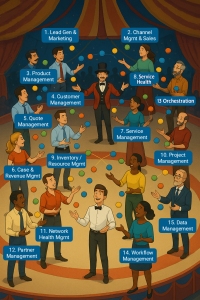
Are you frustrated by the complexity of your OSS/BSS factory? With hundreds or even thousands of systems, all trying to juggle thousands of activities without dropping the ball is like organised chaos. But what if we're looking at it all wrong, both in the way we've always designed our legacy application architectures and how we're now planning to use AI in it? . So many jugglers…

Read More »

Stop the Archaeological Dig: Bringing Your OSS Dinosaur Back to Life

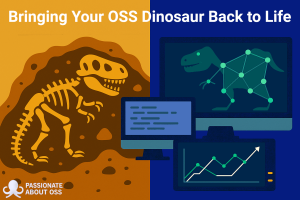
Are you worried that your OSS/BSS stack, or parts of it, might be in desperate need of an overhaul? Many OSS experts love being archaeologists, down on their knees, carefully brushing off the dust to unearth their OSS fossil and painstakingly preserving it. But modern network operations aren't archaeological digs. We can't just make educated guesses from bone fragments and the wise insights of our best historians.…

Read More »

Berkshire Hathaway Discovered a Mutual Destruction Trap in Textiles. Almost too Late. Will Telcos Fall into it too?

The story of Berkshire Hathaway is a famous one. It started in textiles but Warren Buffett chose to drastically change strategy because the textiles industry was dying. You'd have to say his decision has proven to be correct. If it stayed in textiles, Buffett would almost certainly not be as famous as he is today. There are strong similarities between the textiles industry back then and…

Read More »

Want to Design an OSS/BSS Architecture to be Relevant for 10+ Years? Learning from Lindy and the Porsche 911 (part 3)

Modern telco software roadmaps tend to be full of novel features. But what if none of that novelty is enduring? What if the silhouette of the Porsche 911 guides us on what should be included in our next OSS roadmap? The City Map From article 1 in this series, The Lindy Effect tells us that the longer something non-perishable has survived, the longer it is likely…

Read More »

Turn Incidents Into Resilience X-rays: Using Network Outages as Complexity Audits (part 2)

After a major outage, we conduct PIRs (Post Incident Reviews). If we find something, we usually add controls. But when you think about it, that’s a bit like bandages on an infected wound - more layers, more failure points and potentially even a wider blast radius. The durable fix is more clinical: identify and remove the dead tissue. Investigate deeper and find ways to retire brittle…

Read More »