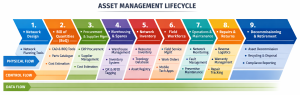
As seen in the diagram, for most of telecom history, the core business model has been simple:
- Build networks
- Sell access to those networks
- Recover capital (revenue) through subscription and usage revenues, and
- Protect margin through scale and operational efficiency
But what happens if (when? after?) that model breaks? What happens if connectivity becomes so abundant, competitive and policy-constrained that the “pipe” is priced at cost, or potentially even below cost?
This is no longer a thought experiment. It’s reality in many countries.
In many markets, core connectivity economics are already under structural pressure from price competition, regulation, wholesale obligations, overbuild, Wi-Fi substitution and hyperscaler-led service expectations. At the same time, operators are being pushed to find growth (in places like APIs, enterprise solutions, AI-enabled operations, fixed wireless access, edge and partner ecosystems), rather than in raw transport alone.
If pipes trend towards zero profit, then telcos stop being connectivity businesses with adjacencies.
I’d ponder whether they then become orchestration businesses that happen to own connectivity, but let’s take a look at a few deeper questions:
.
#1. Can other revenue sources justify operating the network at no or negative profit?
One answer is connectivity as a loss leader. Just as supermarkets discount milk to drive basket size, telcos could use basic access to anchor higher-margin bundles. That could include entertainment, cyber protection, payments, cloud, home automation, collaboration, managed IT, industry solutions or device lifecycle services. McKinsey’s recent work on “beyond the core” growth reflects this shift, arguing that traditional growth engines are slowing and that operators need adjacencies with stronger economics.
A second revenue source is enterprise and vertical solutions. In this model, the network is not the product. It is an ingredient inside a broader B2B-centric outcome (eg secure branch networking, industrial automation, private wireless, logistics visibility, smart-city services or AI infrastructure enablement). The margin pool moves away from access and towards integration, assurance, policy, security, latency guarantees, analytics and business outcomes. That logic is reinforced by the growing B2B focus across the sector.
A third source is programmable network capabilities sold through APIs. GSMA Open Gateway and CAMARA are important here because they aim to package network features such as identity, location, SIM swap detection, quality on demand and edge discovery into developer-consumable products. In that world, revenue does not come primarily from bandwidth. It comes from exposing trust, policy and real-time network context to applications and platforms. GSMA reports that 73 operator groups, representing 285 networks and almost 80% of mobile subscribers worldwide, are now committed to Open Gateway. I personally see this as an outward facing mechanism for buying traditional telco services unless we find something higher up the value-stack (more on that idea later).
A fourth source is monetising differentiated service tiers rather than undifferentiated access. Ericsson’s latest mobility research shows fixed wireless access continuing to grow and speed-based tariffing becoming more common, which is one example of selling experience and performance instead of a generic bit pipe. In mobile, the same logic extends to slicing, priority, uplink performance, low latency and application-specific service levels. Again, just another “pipe” mechanism really.
A fifth source, more speculative but increasingly plausible, is two-sided and ecosystem monetisation. Here, one side of the market gets subsidised because another side pays. That might mean developers paying for network APIs, enterprises paying for verified interactions, advertisers subsidising retail access, governments underwriting coverage, or platform partners sharing revenue for distribution, identity, billing or edge reach. The telco starts to resemble a marketplace, clearing house or trust fabric more than a conventional utility. TM Forum’s recent work on partnership clearing houses and platform enablement points in exactly this direction. This provides more opportunity for value-creation for customers.
.
#2. If that is where profitability goes (to zero), then the telco business model changes profoundly.
First, the centre of gravity moves from ARPU management to portfolio economics. The question is no longer “How do we monetise bits?” but “Which combination of access, software, platforms, trust services, partner offers, etc maximises lifetime gross margin?”
Second, telcos become asset-backed platforms. The differentiator is not owning a network alone. It’s owning scarce assets such as subscriber trust, spectrum, identity, field presence, local distribution, operations (design, build, operate and management) of infrastructure within local regulatory regimes, billing relationships, service data and policy control, then packaging them into reusable products.
Third, success depends far more on ecosystem design. Product management, partnership management, API exposure, settlement, revenue sharing and developer experience become board-level concerns, not side activities.
.
#3. Do these shifting constraints lead directly to OSS/BSS?
In a zero-profit pipe world, OSS can no longer be mainly about inventory, alarms and trouble tickets. BSS can no longer be mainly about rating and billing subscriptions. The stack has to evolve into a real-time commercial, value-add operating system.
OSS shifts towards intent orchestration, closed-loop automation, assurance of experience, API-driven policy control, proof / trust / provenance, and cost-to-serve minimisation. AI matters here not as a fashionable overlay (as we’re currently positioning it) but as a way to reset network economics and make near-zero-margin connectivity survivable.
BSS shifts towards dynamic packaging, partner settlement, master-connectors, API monetisation, entitlement management, digital identity, event-based charging and multi-sided commercial models. In other words, tomorrow’s BSS looks less like a telco biller and more like a platform commerce engine. I’m looking more towards case studies such as Jio and Rakuten or African digital wallets for clues rather than traditional western telco business models.
It’s no coincidence that it’s in African and Asian markets, where ARPU is already approaching zero, that we see these hints.
The biggest strategic implication is this: if pipes go to zero, then the network does not disappear in importance. It’s still vitally important. But it becomes the mechanism for delivery of values. Value accrues to whoever best orchestrates services, trust, transactions and ecosystems on top of the network.
I’m no Ray Kurzweil, but I’d suggest that this is the future telcos need to design for now… because when connectivity becomes cheap enough, business model imagination becomes the scarcest asset in the industry.
But here’s the interesting twist… Is it the telcos that need to design for this possibility now… or the OSS/BSS vendors that supply them? Do the vendors need to show the possibilities / precedents?
Telcos still have a number of assets with strategic possibilities. This articles talks about 10 strengths that telcos retain, but arguably don’t leverage as much as they could.